

As organizations increasingly rely on cloud infrastructure to host critical applications and databases, security becomes a shared and layered responsibility. Two of the most widely adopted platforms in this space are Cloudflare and Amazon Web Services (AWS). Together, Cloudflare and AWS security solutions form a robust framework for protecting cloud databases—from network-level threats to application-layer vulnerabilities.
In real-world deployments, this approach aligns with how companies such as CENTRAL PROFESSIONAL UNIT SOLUTION CO., LTD design practical, operational security architectures for cloud-based systems.
This article explores how Cloudflare and AWS work together to secure cloud databases in real-world scenarios, focusing on practical implementation and operational effectiveness.
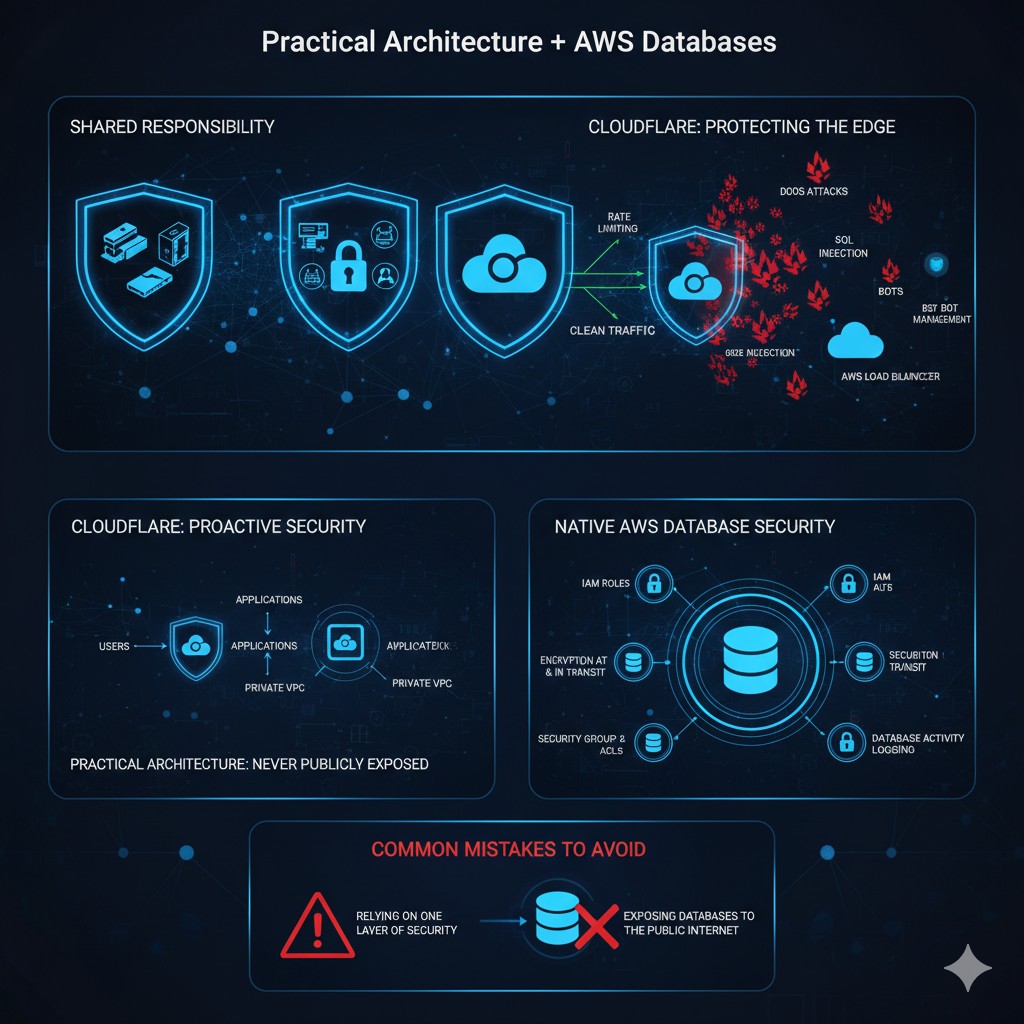
The Shared Responsibility Model in Practice
AWS Responsibility vs. Customer Responsibility
AWS operates under a shared responsibility model. In simple terms:
- AWS secures the underlying cloud infrastructure (physical data centers, networking, hardware).
- Organizations are responsible for securing their applications, configurations, access controls, and data.
Understanding this boundary is essential when designing database security using cloudflare aws security solutions within the broader cloud database security landscape
Where Cloudflare Fits In
Cloudflare operates primarily at the network edge, acting as a protective layer between users and AWS-hosted resources. It helps mitigate threats before they ever reach the AWS environment.
AWS Database Security Fundamentals
Native AWS Database Security Capabilities
AWS provides robust built-in security tools for databases such as Amazon RDS, Aurora, and DynamoDB, including:
- Identity and Access Management (IAM)
- Encryption at rest and in transit
- Virtual Private Cloud (VPC) isolation
- Security groups and network ACLs
- Database activity logging and monitoring
These features form the core security foundation within AWS.
Common AWS Database Security Risks
Despite strong native tools, risks often arise from:
- Misconfigured security groups
- Overly permissive IAM roles
- Exposed database endpoints
- Lack of monitoring and alerting
This is where additional layers like Cloudflare become valuable in addressing common cloud database security risks in AWS environments.
How Cloudflare Enhances AWS Database Security
Network-Level Protection at the Edge
Cloudflare acts as a reverse proxy and content delivery network (CDN), shielding AWS resources from direct exposure. Key protections include:
- DDoS mitigation
- Web Application Firewall (WAF)
- Bot management
- Rate limiting
By stopping malicious traffic early, cloudflare aws security solutions reduce the attack surface of AWS-hosted databases.

Protecting APIs and Application Traffic
Databases are often accessed through APIs and applications rather than directly. Cloudflare protects these entry points by:
- Filtering malicious requests
- Blocking SQL injection attempts
- Enforcing request validation rules
This prevents attackers from reaching backend databases hosted on AWS.
Practical Architecture: Cloudflare + AWS Databases
Typical Secure Deployment Flow
A common secure architecture looks like this:
- Users connect to applications via Cloudflare
- Cloudflare inspects and filters traffic
- Clean traffic is forwarded to AWS load balancers
- Applications access databases within private VPCs
In this model, databases are never publicly exposed, significantly improving security posture.
Zero Trust Access for Databases and Admin Tools
Cloudflare Zero Trust solutions can secure internal tools used to manage AWS databases by:
- Enforcing identity-based access
- Eliminating traditional VPNs
- Logging all access attempts
This approach reduces insider risk and credential-based attacks.
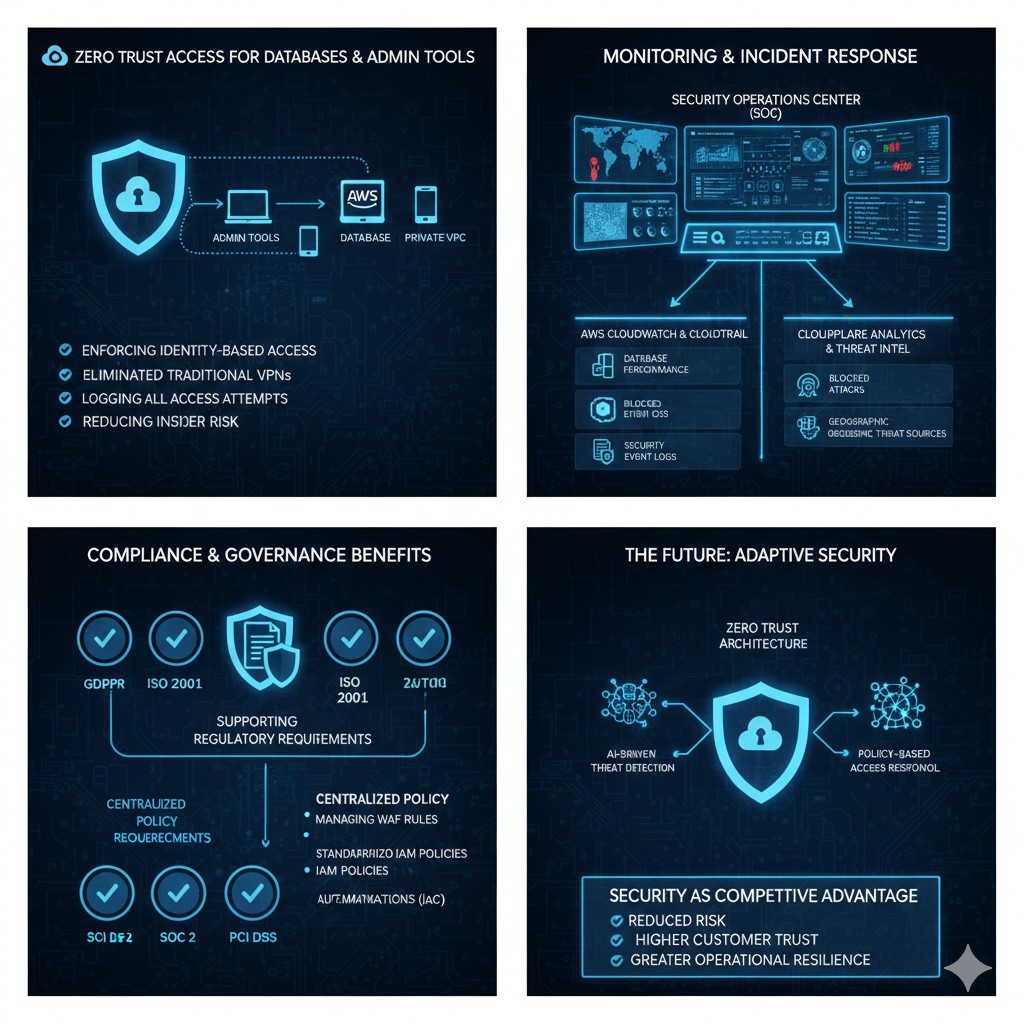
Monitoring, Visibility, and Incident Response
AWS Monitoring and Logging
AWS tools such as CloudWatch and CloudTrail provide:
- Database performance metrics
- Access and configuration change logs
- Security event visibility
These tools help teams understand what is happening inside the AWS environment.
Cloudflare Analytics and Threat Intelligence
Cloudflare adds another layer of visibility by showing:
- Blocked attacks
- Traffic patterns
- Bot activity
- Geographic threat sources
Together, cloudflare aws security solutions offer end-to-end visibility from the edge to the database.
Compliance and Governance Benefits
Supporting Regulatory Requirements
Combining Cloudflare and AWS helps organizations meet compliance requirements such as:
- GDPR
- ISO 27001
- SOC 2
- PCI DSS
Edge protection, encryption, access control, and audit logging all contribute to compliance readiness.
Centralized Policy Enforcement
Security teams can enforce consistent policies across environments by:
- Managing WAF rules centrally
- Standardizing IAM policies in AWS
- Automating security configurations with infrastructure-as-code
This reduces human error and improves governance, aligning with strong enterprise data security management practices beyond individual tools.

Common Mistakes to Avoid
Relying on One Layer of Security
One of the biggest mistakes organizations make is assuming AWS alone is enough. While AWS provides strong tools, defense in depth is essential.
Exposing Databases to the Public Internet
Databases should always reside in private networks. Cloudflare should protect applications—not databases directly exposed to traffic.
The Future of Cloudflare and AWS Security Integration
Toward Zero Trust and Adaptive Security
The future of cloudflare aws security solutions lies in:
- Zero Trust architectures
- AI-driven threat detection
- Automated incident response
- Policy-based access control
Security will become more adaptive, context-aware, and automated.
Security as a Competitive Advantage
Organizations that implement strong, layered security using Cloudflare and AWS gain:
- Reduced risk of breaches
- Higher customer trust
- Faster cloud adoption
- Greater operational resilience
Conclusion
Understanding Cloudflare and AWS database security at a practical level is essential for modern cloud-based organizations. By combining AWS’s native security capabilities with Cloudflare’s edge protection, cloudflare aws security solutions deliver a layered, resilient approach to protecting cloud databases.
This integrated strategy helps organizations reduce risk, improve visibility, and secure critical data without sacrificing performance or scalability.