
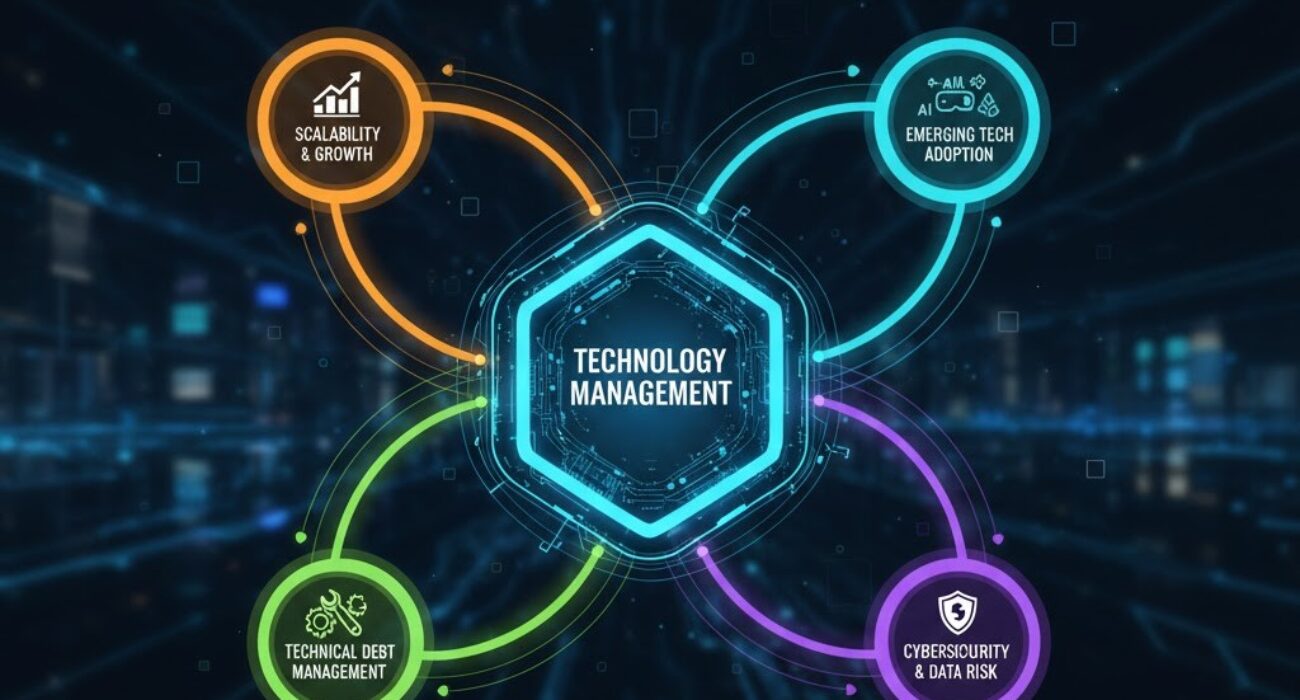
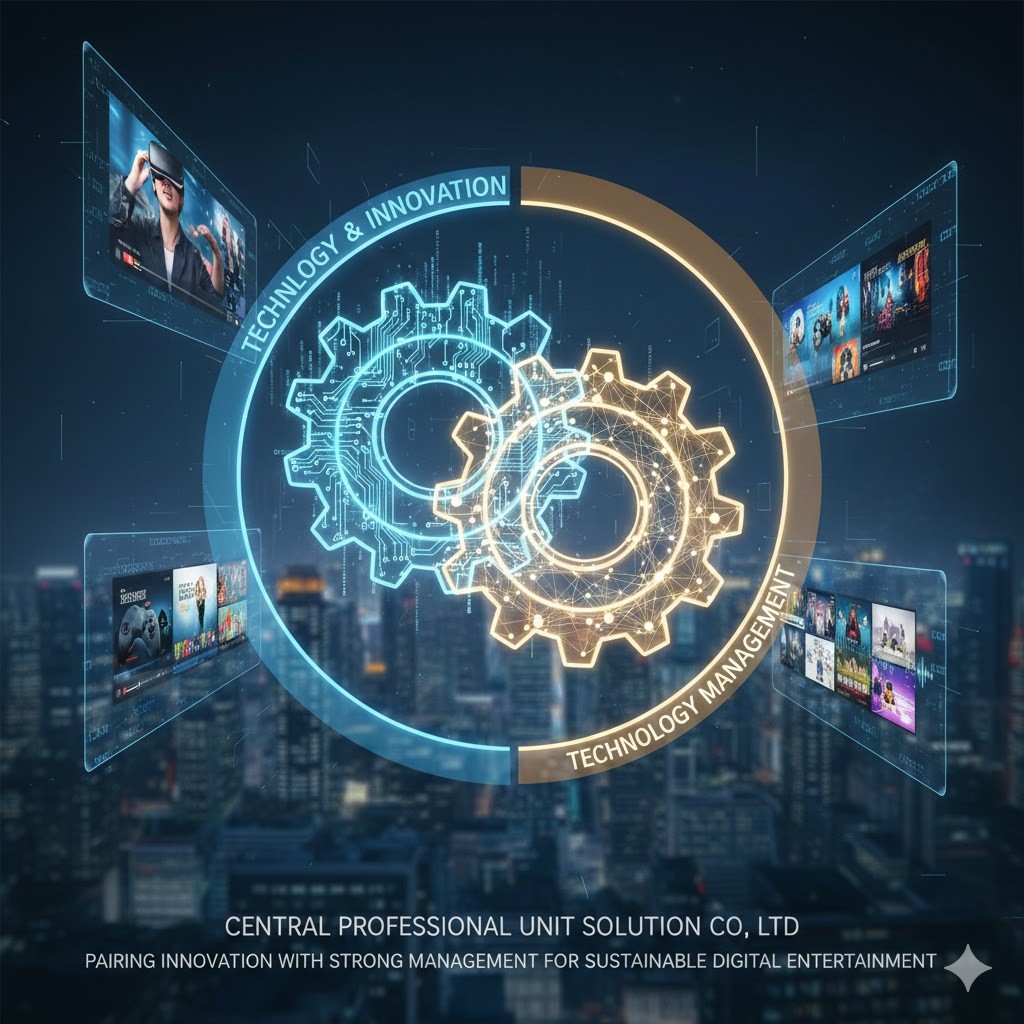
In today’s rapidly evolving digital landscape, entertainment companies are racing to adopt the latest platforms, tools, and infrastructures. While innovation is essential, experience shows that technology alone rarely guarantees success. At CENTRAL PROFESSIONAL UNIT SOLUTION CO., LTD, we believe that sustainable results in digital entertainment projects come from pairing innovation with strong technology management in digital entertainment, ensuring that systems, teams, and strategies work together seamlessly.
Digital entertainment success is not defined by tools alone, but by how effectively those tools are managed, aligned, and scaled.
Why Technology Alone Is Not Enough
Digital entertainment projects operate at the intersection of creativity, engineering, and business strategy. This complexity makes management just as important as innovation.
The Risk of Tool-Centered Thinking
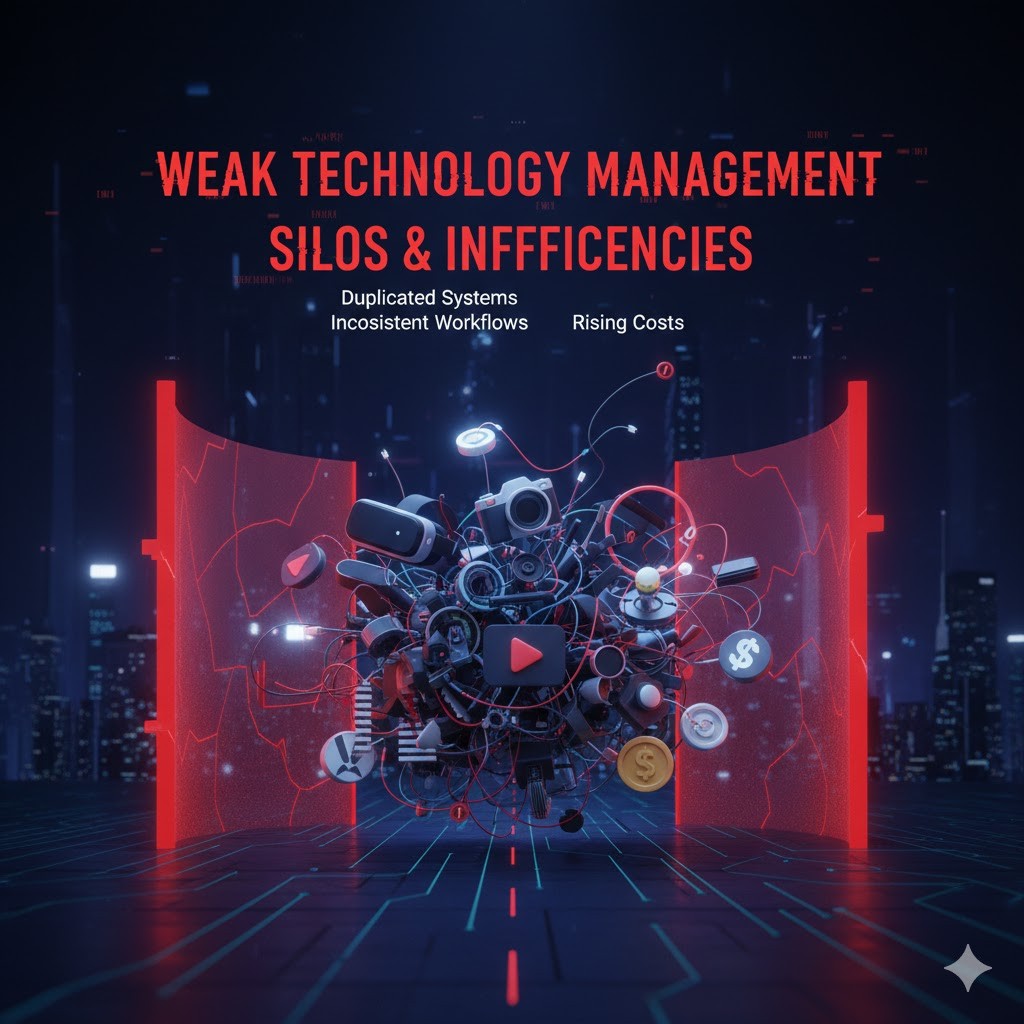
Organizations often invest heavily in “best-in-class” technology, assuming it will solve operational challenges automatically. Without proper governance and coordination, however, these tools can create silos and inefficiencies. Weak technology management in digital entertainment frequently results in duplicated systems, inconsistent workflows, and rising costs.
Operational Complexity in Digital Entertainment
From content creation and streaming infrastructure to monetization and analytics, entertainment platforms rely on interconnected systems. Managing this ecosystem requires structured oversight to ensure performance, stability, and long-term growth across modern digital entertainment operations
Understanding Technology Management in Digital Entertainment
Technology management provides the framework that turns innovation into measurable business outcomes.
Aligning Technology with Strategic Objectives
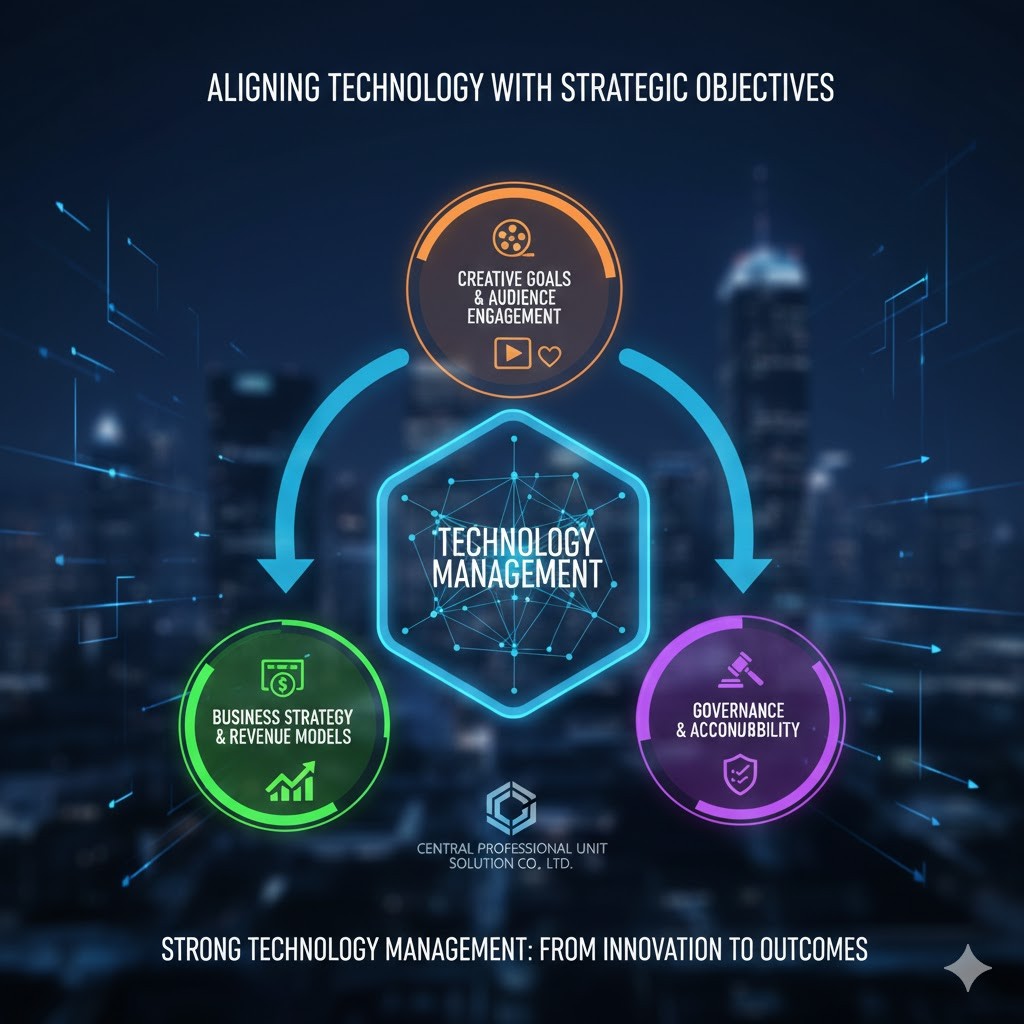
Successful digital entertainment projects begin with alignment. Technology decisions must support creative goals, audience engagement, and revenue models. Strong technology management in digital entertainment ensures that platforms and tools are selected and implemented with clear strategic intent.
Governance and Accountability
As projects scale, decision-making becomes more complex. Governance structures help organizations define ownership, prioritize investments, and manage risk. This clarity reduces delays and improves cross-functional collaboration.
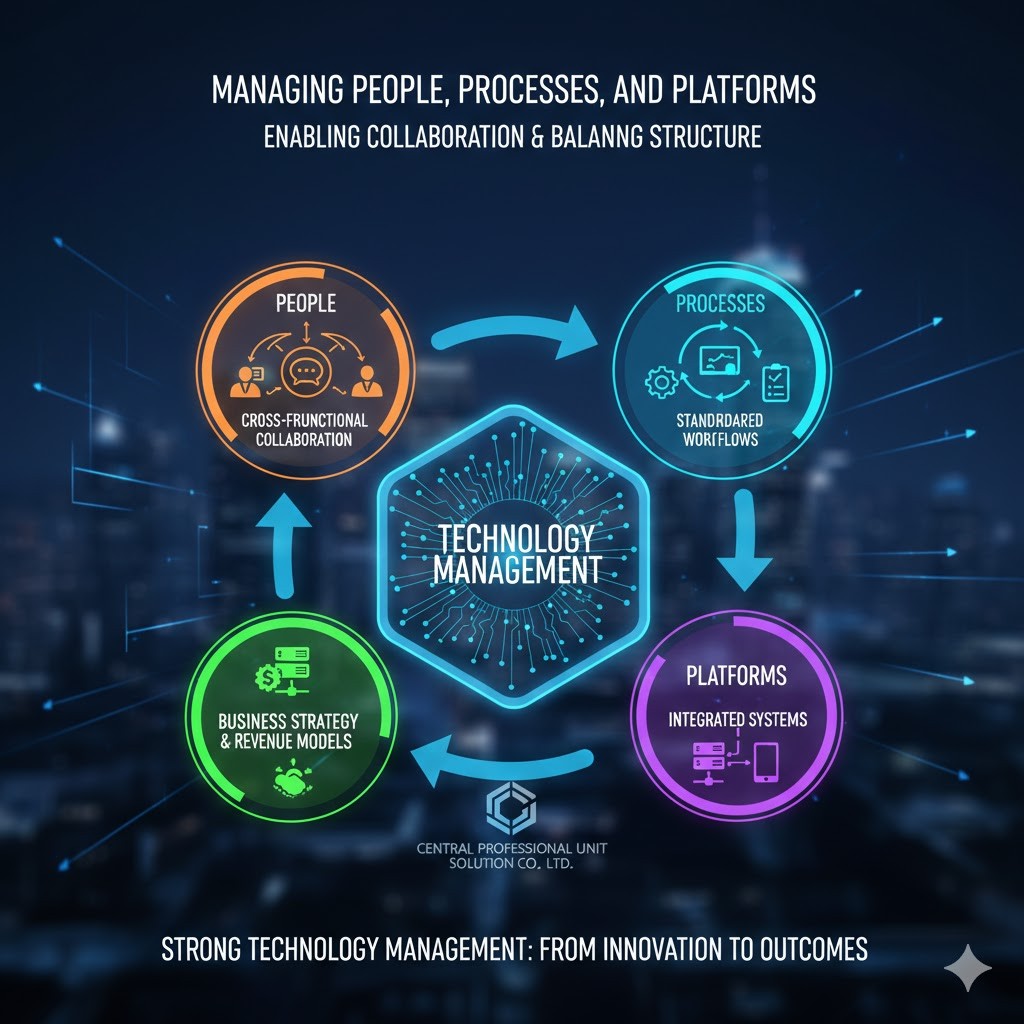
Managing People, Processes, and Platforms
Technology works best when supported by people and processes.
Enabling Cross-Functional Collaboration
Digital entertainment projects depend on collaboration between creative teams, developers, data specialists, and operations staff. Technology management establishes shared standards, workflows, and communication channels that keep teams aligned throughout the project lifecycle.
Balancing Structure and Creativity
Creativity thrives in flexible environments, but flexibility without structure leads to chaos. Effective technology management in digital entertainment introduces standardized processes—such as deployment pipelines and quality assurance—without limiting creative freedom.
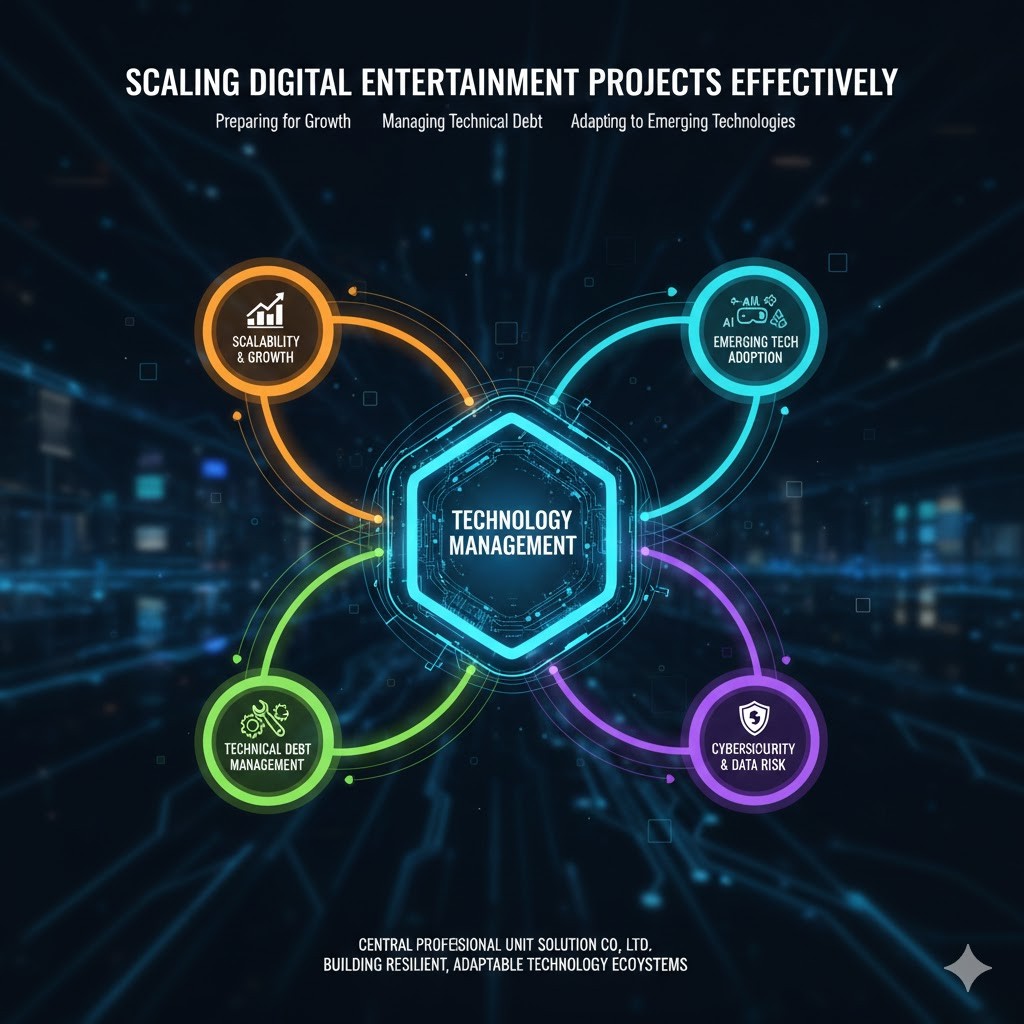
Scaling Digital Entertainment Projects Effectively
Scaling is a defining challenge for digital entertainment organizations.
Preparing for Growth from Day One
Many projects are built for launch, not for growth. When user demand increases, systems often struggle to keep up. Technology management ensures that infrastructure, architecture, and workflows are designed for scalability from the outset within the broader digital gaming and interactive systems landscape
Managing Technical Debt
Rapid development can introduce technical debt that undermines performance and stability. Without oversight, these issues accumulate over time. Proactive technology management in digital entertainment helps identify and address technical debt before it impacts user experience.
Data, Security, and Risk Management
As digital entertainment becomes increasingly data-driven, managing risk becomes critical.
Responsible Data Management
User data powers personalization and monetization strategies, but it also introduces regulatory and ethical challenges. Technology management defines how data is collected, protected, and leveraged responsibly across platforms.
Cybersecurity as an Operational Priority
Protecting intellectual property and user information is no longer optional. Security must be integrated into workflows, supported by policies and continuous monitoring. This approach positions cybersecurity as a core component of technology management in digital entertainment.
Adapting to Emerging Technologies
Innovation in entertainment shows no signs of slowing.
Strategic Adoption of New Technologies
Technologies such as AI, AR, VR, and blockchain present new opportunities—but also new complexities. Technology management ensures that emerging tools are adopted strategically, enhancing existing operations rather than disrupting them.
Building Long-Term Resilience
Rather than chasing every trend, successful organizations focus on adaptability. Flexible architectures and clear management principles allow digital entertainment companies to evolve with changing markets and technologies, often supported by specialized digital entertainment consulting expertise.
Conclusion
Technology may capture the spotlight, but it is only half the story in digital entertainment projects. Long-term success depends on how well technology is managed—how it aligns with strategy, empowers teams, and scales sustainably. By prioritizing technology management in digital entertainment, organizations can transform innovation into lasting value. At CENTRAL PROFESSIONAL UNIT SOLUTION CO., LTD, we are committed to helping digital entertainment businesses build resilient, well-managed technology ecosystems that support growth, creativity, and operational excellence.