
As digital transformation accelerates, cloud infrastructure has become the backbone of modern enterprises. Organizations are no longer debating whether to adopt the cloud, but how to design cloud environments that are secure, scalable, resilient, and aligned with business objectives.
Understanding modern enterprise cloud infrastructure is essential for achieving agility without compromising control or governance—an approach reflected in how CENTRAL PROFESSIONAL UNIT SOLUTION CO., LTD supports organizations in building robust cloud foundations.
This article explores the core components, architectural principles, and operational characteristics that define cloud infrastructure in today’s enterprise environments.
The Evolution of Enterprise Cloud Infrastructure
From On-Premise to Hybrid and Multi-Cloud
Traditional enterprise IT relied heavily on on-premise data centers with fixed capacity and long deployment cycles. Modern enterprise cloud infrastructure has evolved toward:
- Hybrid cloud models combining on-premise and public cloud
- Multi-cloud strategies using multiple cloud providers
- Distributed architectures spanning regions and environments
This evolution allows enterprises to balance flexibility, performance, compliance, and cost, while avoiding common on-premise to cloud migration challenges during large-scale transitions.
Cloud as a Strategic Platform
Today, cloud infrastructure is not just an IT resource—it is a strategic platform that supports:
- Digital products and services
- Data analytics and AI initiatives
- Global operations and remote work
- Continuous innovation and rapid scaling
Enterprise cloud infrastructure directly influences business competitiveness, reinforcing why enterprise technology management matters more than adopting new tools alone.
Core Components of Modern Enterprise Cloud Infrastructure
Compute, Storage, and Networking
At its foundation, enterprise cloud infrastructure includes:
- Scalable compute resources (virtual machines, containers, serverless)
- Elastic storage solutions (object, block, and file storage)
- Software-defined networking and connectivity
These components provide the flexibility to adapt infrastructure to changing workloads.
Cloud-Native Services and Platforms
Modern enterprises increasingly rely on cloud-native services such as:
- Managed databases
- Messaging and event-driven systems
- AI and machine learning platforms
- DevOps and CI/CD pipelines
These services reduce operational overhead and accelerate application development.

Architectural Principles of Enterprise Cloud Infrastructure
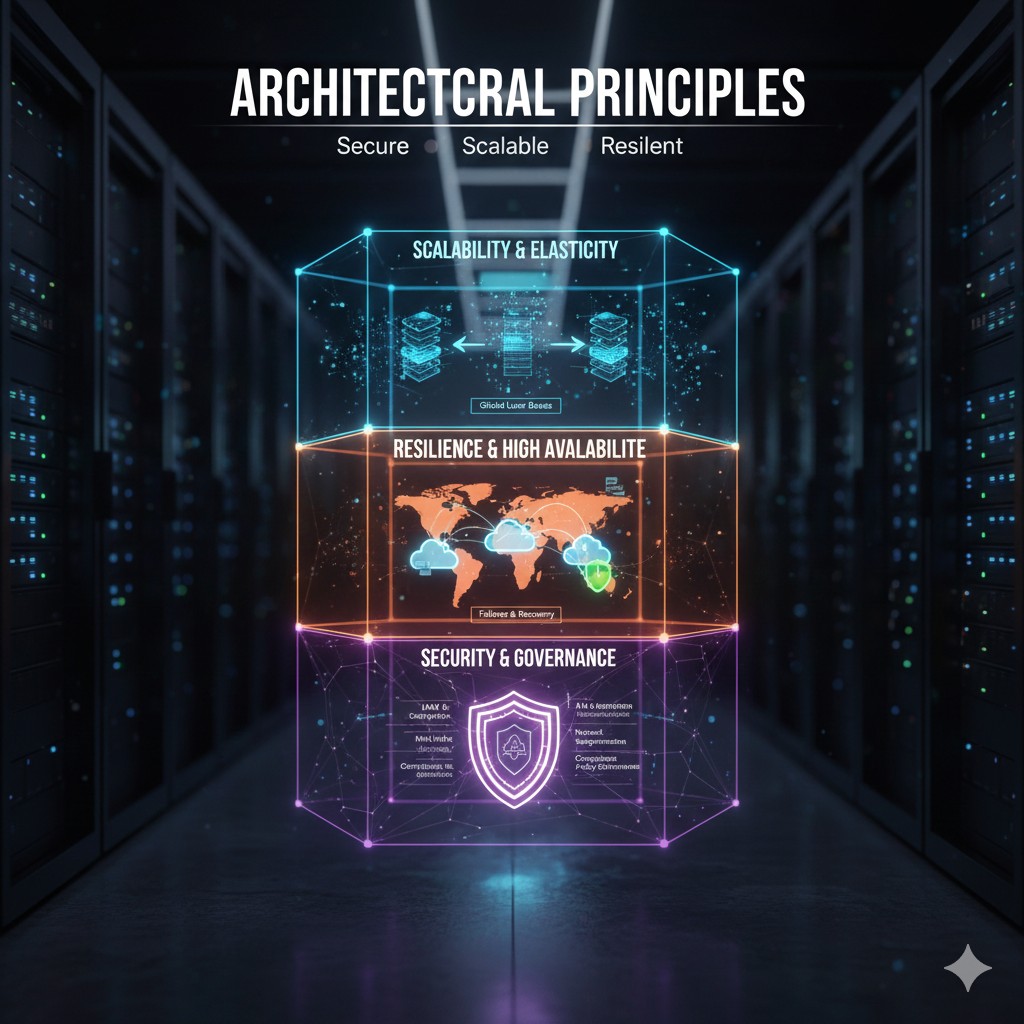
Scalability and Elasticity by Design
Scalability is a defining feature of enterprise cloud infrastructure. Modern architectures are designed to:
- Automatically scale resources up or down
- Handle unpredictable demand
- Support global user bases
Elastic infrastructure ensures performance while optimizing cost.
Resilience and High Availability
Enterprises expect cloud infrastructure to be always available. This is achieved through:
- Multi-region deployments
- Redundant systems and failover mechanisms
- Automated recovery processes
Resilience is built into the architecture rather than added later.
Security and Governance in Enterprise Cloud Infrastructure
Security as an Integrated Layer
Modern enterprise cloud infrastructure embeds security into every layer, including:
- Identity and access management (IAM)
- Network segmentation and isolation
- Encryption at rest and in transit
- Continuous monitoring and threat detection
Security is designed as part of the architecture, not bolted on.
Governance and Policy Enforcement
Large organizations require consistent control across environments. Governance frameworks ensure:
- Compliance with regulations
- Standardized configurations
- Controlled access and usage
- Visibility into cloud resources
Enterprise cloud infrastructure must support centralized policy management while enabling decentralized teams.
Operations and Management in the Cloud
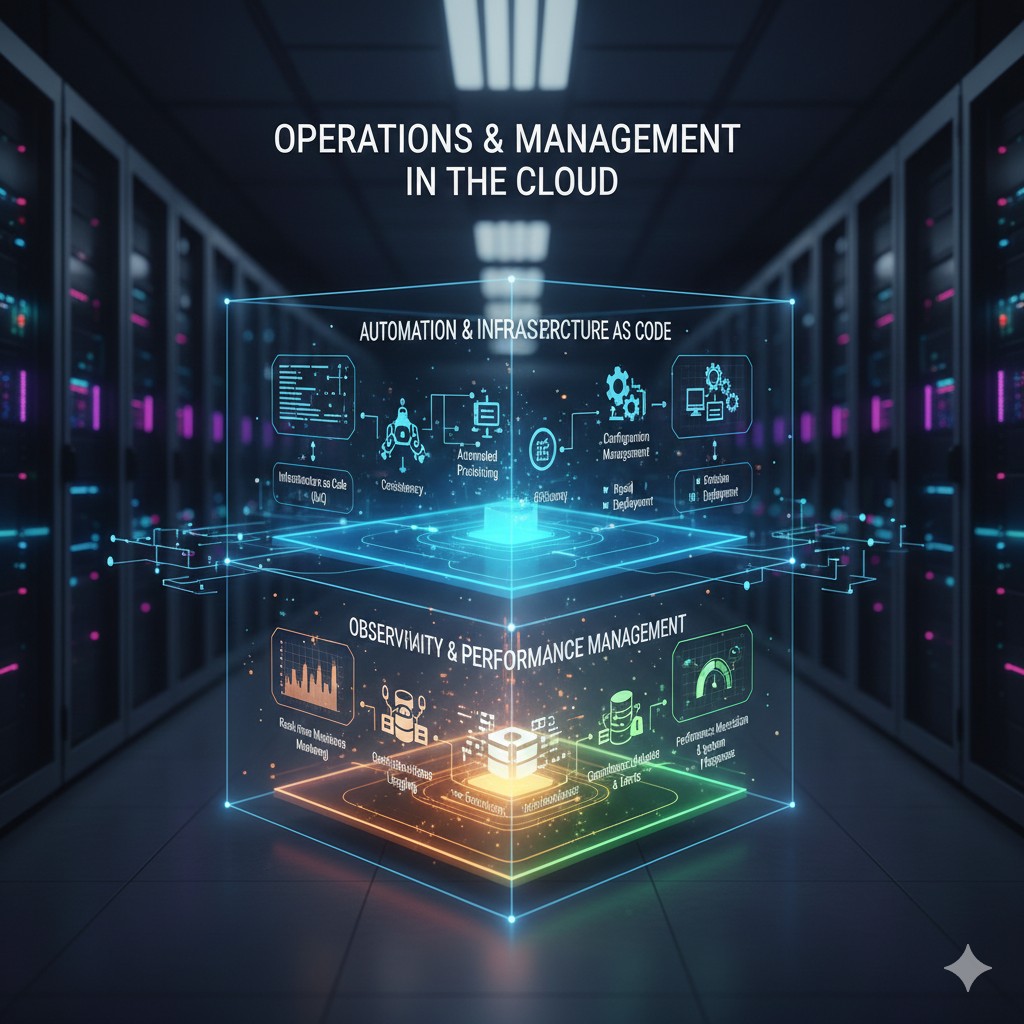
Automation and Infrastructure as Code
Manual configuration does not scale in complex environments. Modern enterprises use:
- Infrastructure as Code (IaC)
- Automated provisioning and updates
- Configuration management tools
Automation improves consistency, reduces errors, and accelerates deployment, helping organizations address common cloud infrastructure management challenges in complex enterprise environments.
Observability and Performance Management
Visibility is critical for operational success. Enterprise cloud infrastructure relies on:
- Real-time monitoring
- Centralized logging
- Performance metrics and alerts
Observability enables teams to detect issues early and optimize system performance.
Supporting Modern Enterprise Workloads
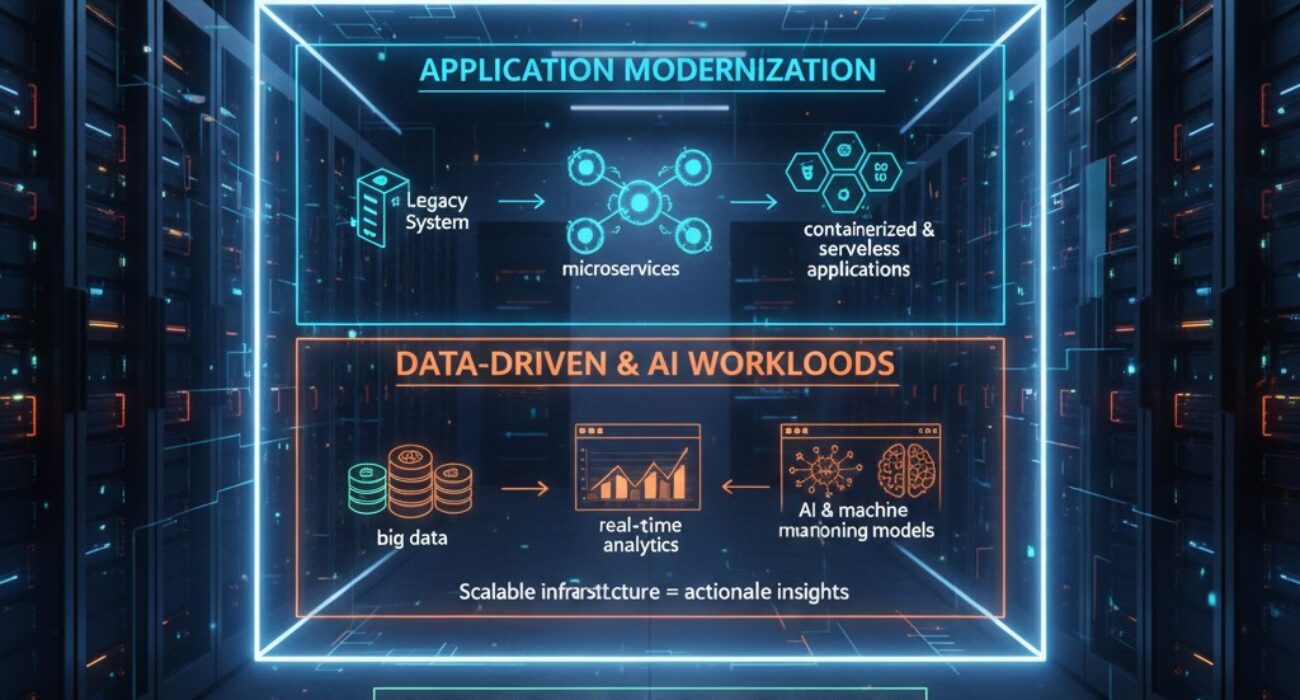
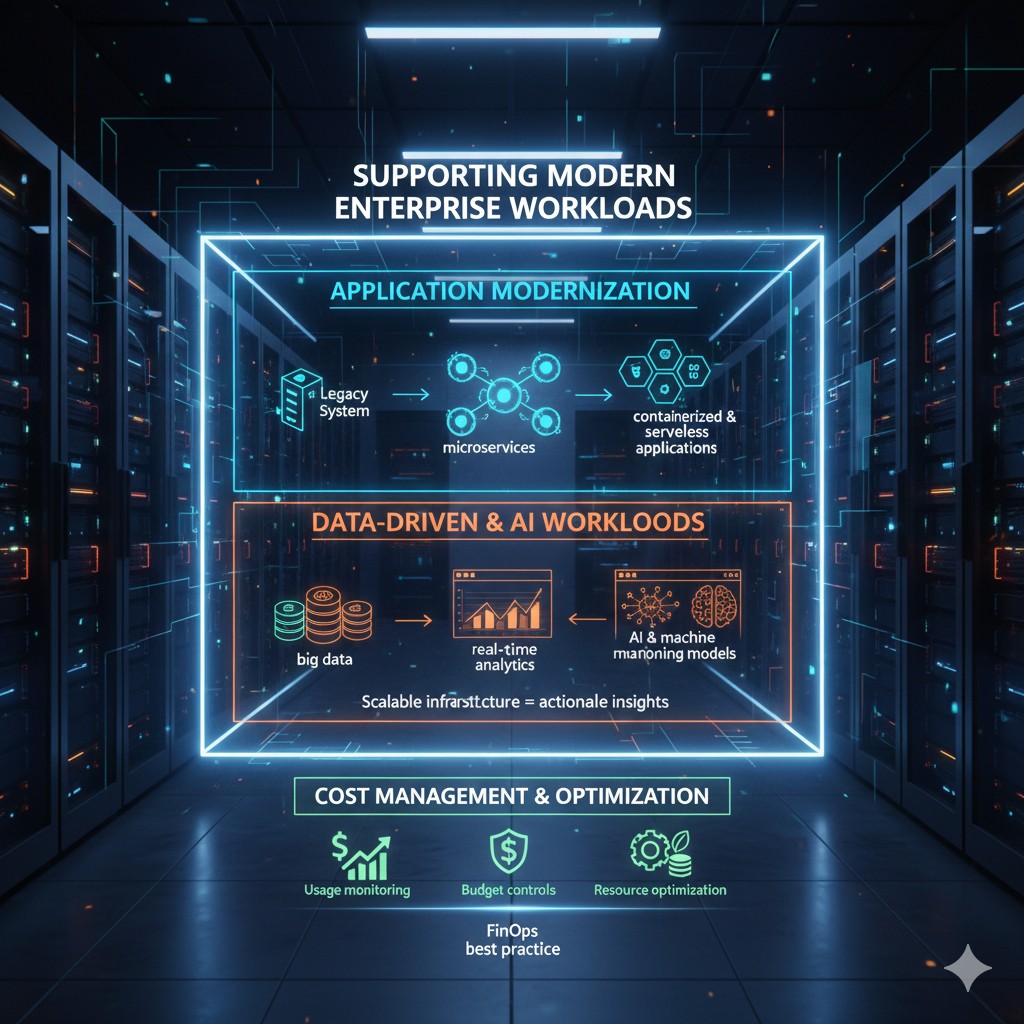
Application Modernization
Enterprise cloud infrastructure supports a mix of:
- Legacy systems
- Modern microservices
- Containerized and serverless applications
This flexibility allows organizations to modernize at their own pace.
Data-Driven and AI Workloads
Cloud infrastructure plays a key role in enabling:
- Big data processing
- Real-time analytics
- AI and machine learning models
Scalable infrastructure allows enterprises to turn data into actionable insights.
Cost Management and Optimization
Balancing Flexibility and Cost Control
While cloud infrastructure offers flexibility, cost management is essential. Enterprises adopt:
- Usage monitoring and cost allocation
- Budget controls and alerts
- Resource optimization strategies
Effective cost governance ensures enterprise cloud infrastructure delivers value without waste.
FinOps as a Best Practice
Many organizations adopt FinOps practices to align finance, operations, and engineering around cloud spending. This collaboration supports smarter decision-making.
The Future of Enterprise Cloud Infrastructure
Toward Intelligent and Adaptive Infrastructure
Future enterprise cloud infrastructure will increasingly leverage:
- AI-driven automation
- Predictive scaling
- Self-healing systems
Infrastructure will become more autonomous and responsive to business needs.
Cloud as the Foundation for Innovation
As enterprises continue to innovate, cloud infrastructure will remain the foundation for:
- Digital ecosystems
- Platform-based business models
- Secure collaboration across partners
Cloud is no longer just infrastructure—it is an enabler of transformation.
Conclusion
Modern enterprise cloud infrastructure is defined by scalability, resilience, security, and operational intelligence. It integrates technology, governance, and automation to support today’s complex and fast-changing business environments.
By designing cloud infrastructure as a strategic platform rather than a technical utility, enterprises can achieve greater agility, stronger security, and sustained innovation in the digital era.