

For many enterprises, transitioning from traditional on-premise infrastructure to the cloud is a critical step in digital transformation. While cloud adoption offers scalability, flexibility, and faster innovation, the migration journey is rarely straightforward. Without careful planning and execution, organizations often face on-premise to cloud migration challenges that affect cost control, security, performance, and business continuity.
Understanding these challenges is essential for successful cloud transformation, an area where CENTRAL PROFESSIONAL UNIT SOLUTION CO., LTD supports enterprises with structured and risk-aware migration approaches.
This article explores common pitfalls organizations encounter during cloud transitions and highlights practical lessons enterprises should consider before migrating.
Why Enterprises Move from On-Premise to Cloud
Business Drivers Behind Cloud Migration
Enterprises migrate to the cloud to achieve:
- Greater infrastructure scalability
- Faster application deployment
- Reduced hardware maintenance
- Improved disaster recovery capabilities
While these benefits are compelling, realizing them requires careful navigation of migration challenges.
Complexity of Legacy Environments
Most enterprises operate complex legacy environments built over many years. These systems often include:
- Tightly coupled applications
- Custom integrations
- Outdated technologies
Such complexity makes on premise to cloud migration challenges particularly difficult to manage within modern enterprise cloud infrastructure environments.

Common Strategic Pitfalls in Enterprise Cloud Transitions
Lack of Clear Migration Strategy
One of the most frequent mistakes is migrating without a clear strategy. Enterprises may:
- Move applications without assessing cloud readiness
- Treat cloud as a simple data center replacement
- Ignore long-term architectural implications
Without a defined roadmap, migrations often lead to higher costs and operational inefficiencies.
Underestimating Organizational Impact
Cloud migration is not just a technical change—it is an organizational transformation. Failing to prepare teams for new roles, tools, and processes increases friction and slows adoption.
Technical Challenges in On-Premise to Cloud Migration
Application Compatibility Issues
Not all on-premise applications are cloud-ready. Common problems include:
- Legacy architectures that do not scale
- Dependencies on physical hardware
- Unsupported operating systems
Refactoring or re-architecting applications is often necessary but frequently underestimated.
Data Migration and Integrity Risks
Moving large volumes of data introduces risks such as:
- Data loss or corruption
- Extended downtime
- Performance degradation
These issues are central to many on premise to cloud migration challenges and require careful planning and validation.
Security and Compliance Pitfalls
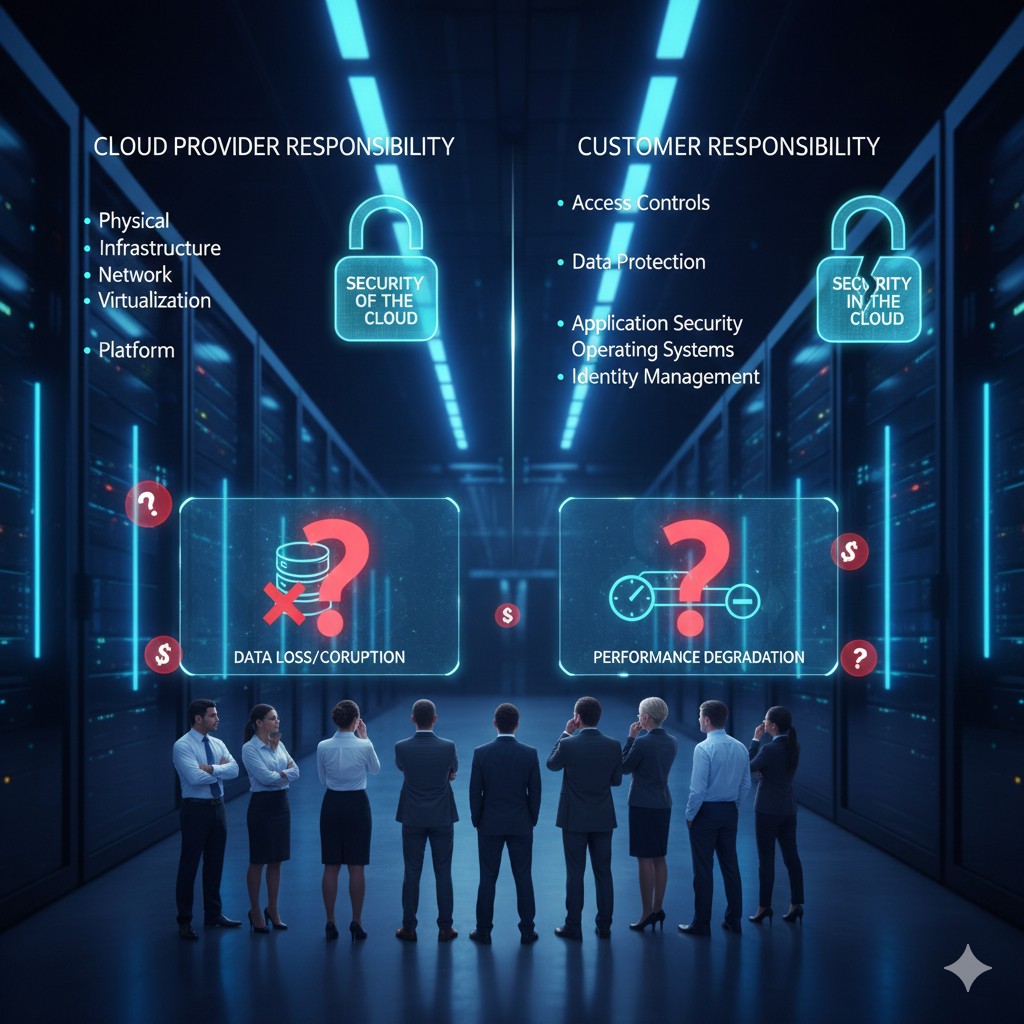
Misunderstanding the Shared Responsibility Model
Enterprises often assume cloud providers handle all security responsibilities. In reality, customers remain responsible for:
- Access controls
- Data protection
- Application security
Misunderstanding this model leads to serious security gaps during migration.
Compliance Gaps During Transition
During migration, compliance controls may not be fully enforced, increasing regulatory risk. Temporary environments and transitional architectures often become weak points.
Cost and Performance Miscalculations
Unexpected Cloud Costs
Cloud pricing models differ significantly from on-premise cost structures. Common cost-related pitfalls include:
- Overprovisioned resources
- Inefficient storage usage
- Lack of cost monitoring
Without governance, cloud spending can quickly exceed expectations.

Performance and Latency Issues
Applications designed for local networks may perform poorly in cloud environments due to:
- Network latency
- Improper resource sizing
- Inefficient architectures
Performance testing is often overlooked during migration planning.
Operational and Management Challenges
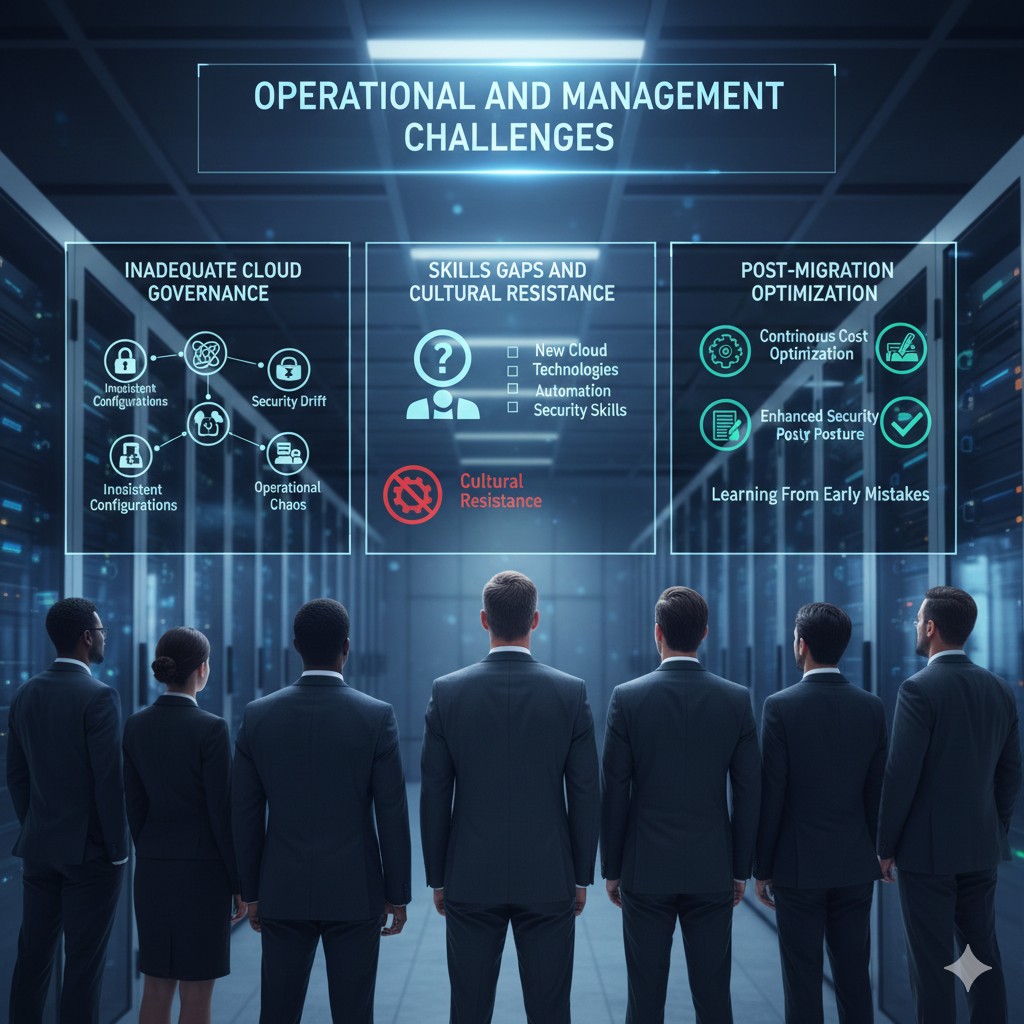
Inadequate Cloud Governance
Enterprises that migrate without governance frameworks face:
- Inconsistent configurations
- Security drift
- Operational chaos
Effective governance is essential to control complexity and risk through disciplined cloud infrastructure management practices.
Skills Gaps and Cultural Resistance
Cloud technologies require new skills in automation, security, and operations. Skills gaps and resistance to change exacerbate on premise to cloud migration challenges and slow progress.
Practical Approaches to Avoid Migration Pitfalls
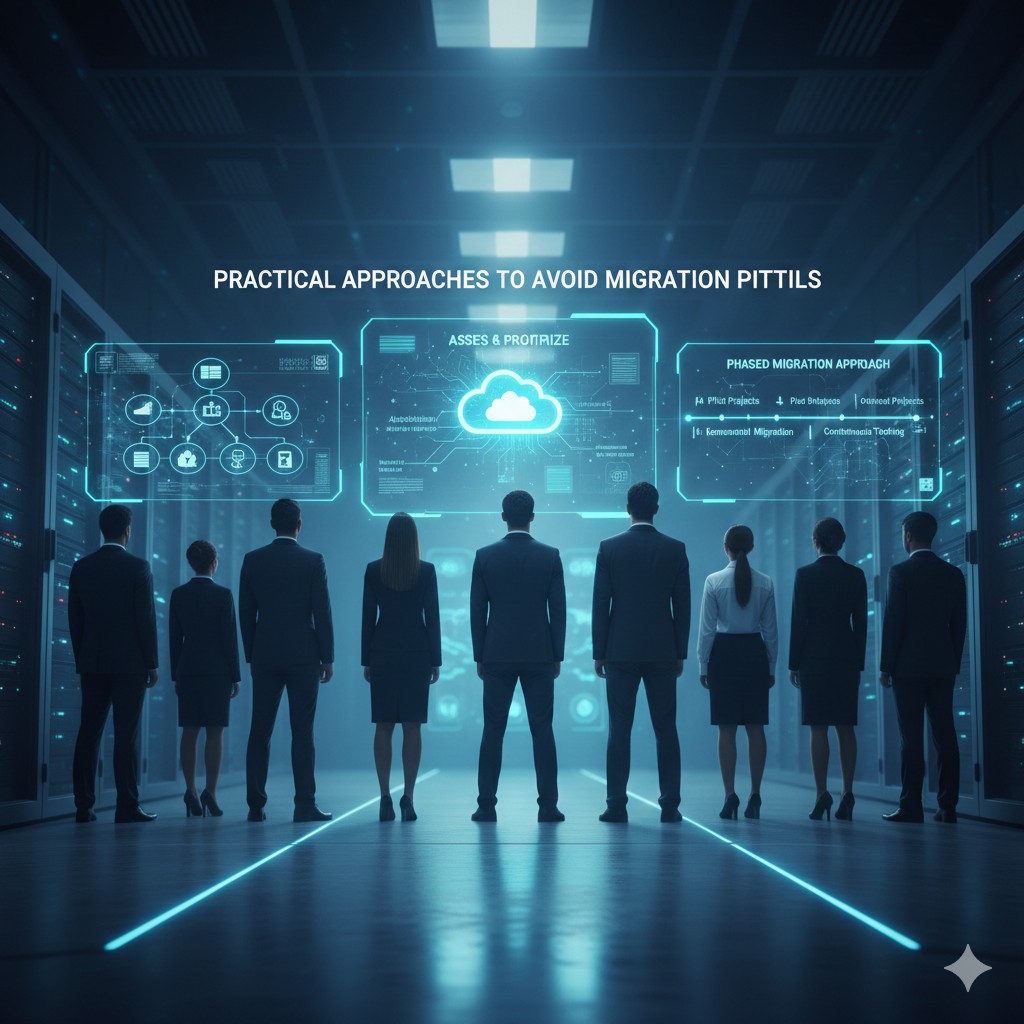
Assess and Prioritize Before Migrating
Successful migrations begin with:
- Application and data assessments
- Cloud readiness evaluations
- Clear prioritization of workloads
Not everything should move to the cloud at once.
Adopt a Phased Migration Approach
Rather than “big bang” migrations, enterprises benefit from:
- Pilot projects
- Incremental workload migration
- Continuous testing and optimization
A phased approach reduces risk and builds confidence.
Post-Migration Optimization and Continuous Improvement
Cloud Is Not the End State
Migration is only the beginning, reinforcing the importance of strong enterprise technology management beyond the initial cloud transition. Enterprises must continuously:
- Optimize costs
- Improve security
- Modernize applications
Ignoring post-migration optimization limits the value of cloud adoption.
Learning From Early Mistakes
Early migration challenges provide valuable lessons. Organizations that adapt quickly and refine processes are more likely to achieve long-term success.
Conclusion
Transitioning from on-premise infrastructure to the cloud offers significant opportunities, but it also presents substantial risks. Understanding common on premise to cloud migration challenges helps enterprises avoid costly mistakes and disruption.
By developing clear strategies, addressing organizational and technical readiness, and adopting phased, well-governed migration approaches, enterprises can successfully navigate cloud transitions and unlock the full potential of cloud computing.